Wednesday, 16 May 2012

UPM SKYPE EXCHANGE 6

In December we run a Skype exchange with students at Madrid Technical University (UPM); here are the practical guides that we created for students in English & Spanish.

ACADEMIC AND PRACTICAL GUIDE

Imperial College London is a public research university located in London, United Kingdom. Imperial was established in 1907. In 2007 the College celebrated the 100th anniversary of its founding and became independent from the University of London.

File:Imperial College London.png
Coat of Arms of Imperial
College London. Author: Eusebius

Imperial College’s main campus is situated in South Kensington, a prime London location reached easily by tube, bus or cycling routes. The other Imperial campuses in central London are also well served by transport links.

An important feature is the variety of pupils.The students at this university came from more than 125 countries, which gives the university a multicultural environment.

The library is open 24 hours but most other buildings close at 11 pm. It is located next to the Queen's lawn. They have a range of different study zones. Each floor is designated as either group, quiet or silent study to help everyone find their own preferred work space. Their book collection contains material to support both taught courses and research.

Imperial College Union has over 300 clubs and societies, amongst the highest number in the UK. Published weekly, “Felix” is the free student newspaper of Imperial College London. It aims to be independent of both the College itself and also the Student Union. The editor is elected annually from the student body.

Sport Imperial's facilities offer free gym and swimming pool to all students. There is no timetabled teaching on Wednesday afternoons, giving everyone the chance to take part in a wide range of activities.

Concerning the accommodation, Imperial College owns and manages twenty halls of residence. Over three thousand rooms are available, guaranteeing first year undergraduates a place in College residences. The majority of halls offer single or twin accommodation. Students’ bedrooms are provided with basic furniture and acces to shared kitchens and bathrooms. Most rooms have wi-fi access.

Something worthy of note is that Imperial College is accepted as one of the best universities in the world.

Mercedes Bellón Crespo and Josué Del Valle Blaya

Thursday, 3 May 2012

Just landed 5 - Entrevista con Jonathan Howells

¿Dónde has pasado tu año Erasmus y qué has estudiado?

Pasé el año en Madrid y estudiaba física en la Universidad Autónoma de Madrid.

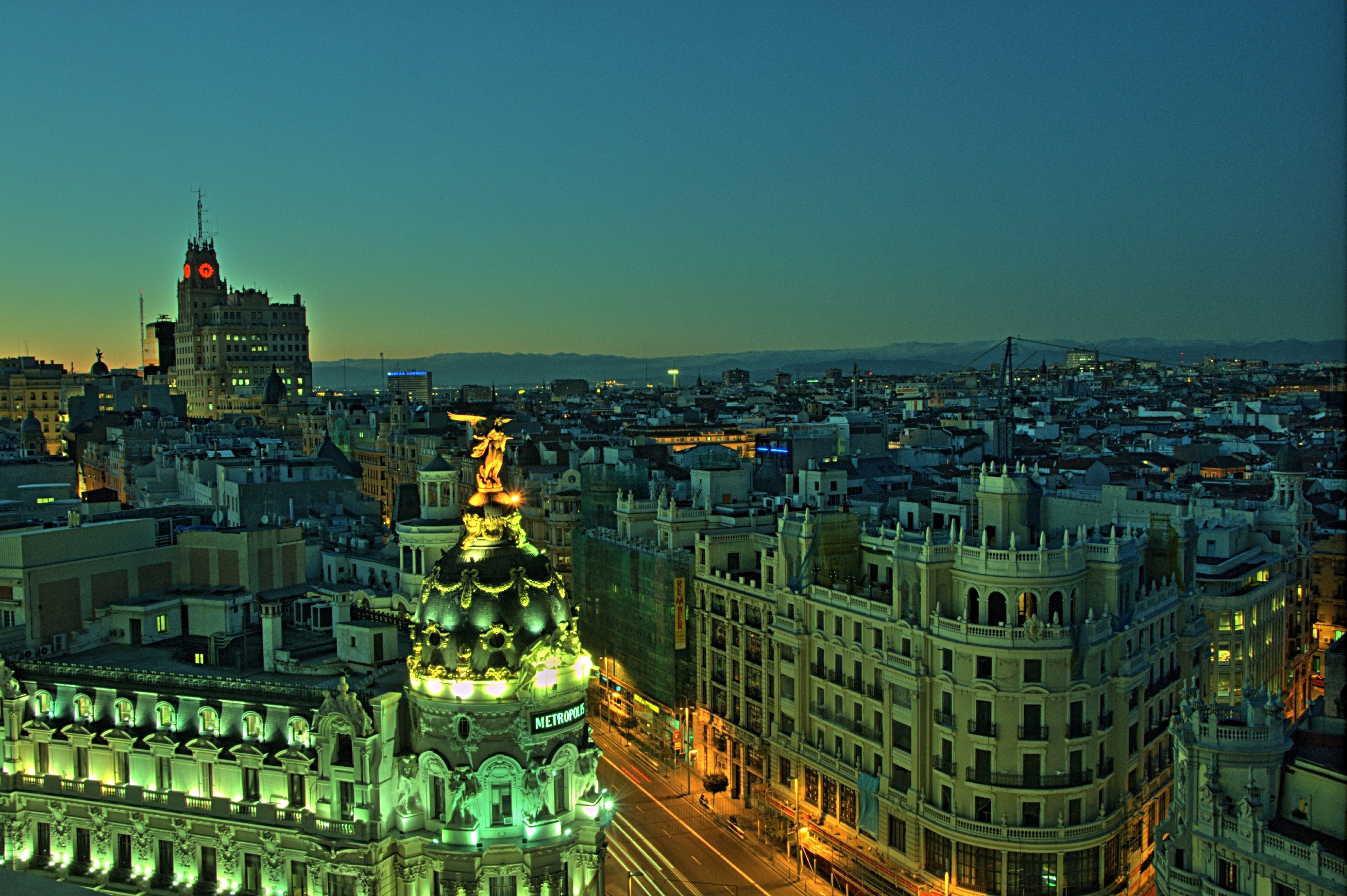
File:Gran Vía (Madrid) 50.jpg
Gran Vía, Madrid. Matthew Hine


Describe brevemente la ciudad y su Universidad (las clases, profesores, alumnos).

La diferencia más notable entre Madrid y Londres es que todos los sitios están mucho más cerca. Desde La Puerta del Sol se puede andar a casi cualquier lugar.
El alojamiento, la comida y el transporte son bastante caros pero no tan caros como Londres.

¿Tuviste algún tipo de apoyo en España al llegar? (asociación Erasmus, tutores, etc)

Sinceramente, no he recibido mucho apoyo aquí. Hay una asociación Erasmus y ha habido una fiesta pero la montaron muy temprano, antes de que yo llegase. Menos mal que soy bastante independiente. Tengo un tutor de proyecto y otro tutor académico.

¿Encontraste algún tipo de problemas?

El único problema que  recuerdo es que no nos dieron un horario de clases cuando llegamos. También en la organización de la matriculación porque me confundí (no me mandaron e-mails y demás).

¿Cómo conseguiste tu alojamiento?

Encontré un piso compartido por internet, pero no es muy aconsejable. Yo aconsejaría buscar una habitación en la residencia o quedarse en un albergue juvenil al principio así que puedes ver los pisos por ti mismo. 

¿Qué es lo que más te ha gustado de tu experiencia?

La fiesta, los españoles salen más que los ingleses, hay discotecas increíbles, bares y demás.

¿Y lo que menos te ha gustado?
Las instalaciones de la universidad son peores que las de Imperial. No hay tantos ordenadores y la comida de la cafetería es bastante sosa.

¿Recomendarías la experiencia? ¿Por qué?
Sí, por que conocerás a mucha gente, mejorarás tu español, el curso no es tan difícil como en Imperial y cuesta menos que un año en Londres (recibirás una beca de ERASMUS).

¿Qué consejos le darías a futuros Erasmus que vayan a visitar “tu” ciudad?
Compra un abono mensual para jóvenes tan pronto como llegues en Madrid, no es una ganga pero es mucho más barato que los billetes.

¿Podemos publicar tu nombre en el blog? (los datos que daremos serán sólo el nombre y el curso que has hecho en España; tu dirección de correo electrónico no será publicada)
Sí, por supuesto.

Tuesday, 27 March 2012

ESTUDIAR EN MADRID

Madrid, como capital de España, ofrece todo tipo de posibilidades tanto académicas como culturales y de ocio. Para poder disfrutar al máximo de todas esas posibilidades, necesitas conocer tus opciones (algo que no siempre es fácil); por ello, y después de investigar un poquito, os voy a dejar unos cuantos enlaces a sitios que os pueden ser muy útiles al principio de vuestra nueva aventura.

File:CollageMadrid.jpg
Matrich, Collage Madrid
Lo primero que uno tiene que tener en cuenta es el alojamiento. Las universidades españolas suelen ayudar a los estudiantes de intercambio a encontrar alojamiento pero por si no es el caso, la comunidad de Madrid ofrece varias bolsas de alojamiento para gente joven y estudiantes:

http://www.emes.es/VivirenMadrid/Alojamientoestudiantes/tabid/219/Default.aspx

http://www.madrid.org/cs/Satellite?pagename=PortalJoven/Page/JUVE_home&homesubtype=JUVE_HomePublica&c=Page&site=PortalJoven

http://www.aluni.net/alojamiento-en-pisos/para-estudiantes/alquilar-habitaciones-en-apartamentos-compartidos/

Otra de las opciones de alojamiento, sería una residencia o colegio mayor (aunque suele ser mucho más caro que una habitación en alquiler):

http://www.upm.es/sfs/Rectorado/Vicerrectorado%20de%20Alumnos/Extension%20Universitaria/Bolsa%20Vivienda/DATOS%20DE%20COLEGIOS%20MAYORES.pdf

Existe otro programa para estudiantes llamado "Vive y Convive" en el que el estudiantes vive gratis en el piso de una persona mayor a cambio de compañía y ayuda en pequeñas tareas:

http://www.upm.es/sfs/Selectividad/programa_intergeneracional.pdf

Otros de las cosas a tener en cuenta en Madrid es el transporte. Existen bonos para jóvenes (hasta 23 años)y bonos de adultos por temporada. Si no vas a utilizar el transporte público con frecuencia, la mejor opción es comprarse un bono de 10 viajes en cualquier estación de metro (aunque también sirve en los autobuses y el metro ligero) ya que sale más barato que comprarse un billete individual.
Os dejo el enlace a la página de transportes de Madrid:

http://www.ctm-madrid.es/


Para finalizar os dejo una guía elaborada por la UPM para estudiantes extranjeros de intercambio en la UPM:

http://www.upm.es/sfs/Rectorado/Vicerrectorado%20de%20Alumnos/Extension%20Universitaria/Intercambios:%20movilidad%20de%20estudiantes/Erasmus/Extranjeros/GUIA%20PARA%20ESTUDIANTES%20EXTRANJEROS%20-%20SPANISH.pdf

UPM SKYPE EXCHANGE 5

In December we run a Skype exchange with students at Madrid Technical University (UPM); here are the practical guides that we created for students in English & Spanish

 
How to Take Advantage of a Stay in London
London, considered by many with New York, Tokyo and Paris one of the four “alpha/global” cities, offers an infinite range of possibilities and opportunities and anybody would see his or her expectations fulfilled there. What follows is a possible brief itinerary to make the most of the cultural and leisure offer of an exceptional and outstanding city.

File:Palace of Westminster, London - Feb 2007.jpg
Diliff, The Palace of Westminster at night
seen from the south bank of the River Thames.

If only one aspect of London has to be singled out, it is undoubtedly its cultural attractions. The museums are varied and renowned, for instance, the British Museum, where we find relics and antiques, those from ancient Egypt standing out, like the Rosetta Stone. We must mention the Victoria and Albert Museum (the world’s largest museum of decorative arts and design), the National Gallery (containing masterpieces of painters such as Caravaggio, Monet, Rembrandt, Van Gogh or Velázquez), the National Portrait Gallery, and the Natural History Museum. Finally, focused on entertainment, the wax museum of Madame Tussauds, in Marylebone, and the Science Museum are two excellent options.
Theatres are abundant in London. The most interesting ones are probably those located in the West End, mainly devoted to the performance of musicals. As well as the West End, this city has a lot of other emblematic places, such as Piccadilly Circus (recommended for going out),
Leicester Square
(with some of the major cinemas in the world), the cosmopolitan street market of
Portobello Road
, or the ethnic enclave of Chinatown.
If we are looking for a shopping street, we may make our way towards Knightsbridge, a road spanning the City of Westminster and the Royal Borough of Kensington and Chelsea. On the other hand, if we feel like spending a day at a theme park, surely Thorpe Park, Surrey, is a good choice.
For strolling and relaxing, there are two prominent green spaces in London: Hyde Park and Regent’s Park. At the first one, we can visit Winter Wonderland, a place where we can do activities like ice skating during the Christmas season.
At O2 Arena and Earls Court Exhibition Centre, we can attend concerts and sport shows, whereas at restaurants like Boisdale, in Belgravia, we can taste top quality British cuisine.
To finish, we might say goodbye to the city with its impressive view from above on the London Eye, the tallest Ferris wheel in Europe, situated on the banks of the River Thames.
 Juan Manuel Domínguez López


Thursday, 15 March 2012

UPM SKYPE EXCHANGE 4

In December we run a Skype exchange with students at Madrid Technical University (UPM); here are the practical guides that we created for students in English & Spanish


London Engineering Works: THE WOBBLY BRIDGE
There is a great variety of monuments and other popular places to visit in London. Who doesn’t know the most emblematic monuments of London, such as Westminster Abbey, the London Eye, the British Museum or the Tower of London?
However, one of the most innovative engineering structures is actually unknown for most non-British people: the Millennium Bridge, officially known as the London Millennium Footbridge. This suspension bridge is made of steel and it crosses the River Thames, linking Bankside with the city. The bridge was designed and built due to the beginning of the new millennium, being inaugurated in 2000. That’s the reason of its name.
The design of the bridge was the subject of a competition whose winners were Arup, Foster and Partners and Sir Anthony Caro. The bridge's suspension design had the supporting cables below the deck level in order to improve the view and respect the height restrictions. Its eight suspension cables allow the bridge to support a working load of five thousand people at one time. Those two characteristics are essential for its double function: tourism and transport.
At first, the Millennium Bridge was very criticized because it was temporally closed due to a problem with vibrations. Despite the fact that this problem was rapidly solved, the affectionate "wobbly bridge" epithet remains in common usage amongst Londoners.
Pedro Fernández Gaspar

Millennium Bridge, London © Copyright Peter Trimming


Tuesday, 6 March 2012

UPM SKYPE EXCHANGE 3

In December we run a Skype exchange with students at Madrid Technical University (UPM); here are the practical guides that we created for students in English & Spanish

LEISURE AND CULTURAL GUIDE OF LONDON

London is the capital of the United Kingdom and with nearly eight million inhabitants is one of the most important cultural centers in the whole world.
Therefore you can find some relevant museums or galleries like the British Museum where you can find millions rare things from around the globe, from prehistoric to modern times. In 1824 the National Gallery was founded and nowadays it contains and amassing collection of Western paintings. The national gallery of British art is at Tate Britain, in 2000 this collection moved to Tate Modern. Nevertheless, if you are looking for a more scientific museum you should go to the "Albertopolis", a cultural and scientific quarter. Three major national museums are located there: the Victoria and Albert Museum, the Natural History Museum and the Science Museum. If you want to meet fake famous people you can also visit Madame Tussauds Wax Museum.

London city is also home to many orchestras and concert halls, such as the Barbican Arts Centre, where you can find London Symphony Orchestra, Cadogan Hall and the Royal Albert Hall. London has also two opera houses: the Royal Opera House and the Coliseum Theatre.

However if you are looking for modern music you should go to London’s arenas shuch asincluding Earls Court, Wembley Arena and the O2 Arena. Several music festivals are held in London for example the Wireless Festival. An important place for music is the Abbey Road Studios where The Beatles recorded many of their hits.

In London there are also huge parks like the Royal Parks of Hyde Park, Kensington Gardens at the West of central London and Regent's Park on the northern part of the city. In the last one you can find the London Zoo the oldest scientific zoo. If you walk a bit you can reach Primrose Hill where you can enjoy one of the best places in the city to view London’s skyline. Hyde Park is popular for sports and sometimes hosts open-air concerts.

             If you are a shopaholic you will be delighted because in London there are loads of different places to go shopping. If you’re looking for 'high street' shops you can go to Oxford Street, which sometimes become really crowded. Alternatively for a less busy, more relaxing shopping experience, you can go to Covent Garden, where you can have an expensive cappuccino, and watch some street theatre at the same time.

Moreover there are some flea markets in London where you can buy whatever you had never thought before. There are flea markets about Arts and antiques, flower etc. It is very famous the one in Portobello Road where you can find great antiques
"Portobello Market" Copyright Rosalind Mitchell
If you travel with friends there are a lot of places to go in our free time. The main attraction for foreign people and native citizens of course, are pubs because there are so many types. For example people can choose between the traditional pubs where you can drink beer and others option like pubs with live music, or gastro-pubs where you can have a good meal with friends.

CLARA FABIANA GONZÁLEZ MIGUEL
JAVIER DOMÍNGUEZ MARTÍNEZ 

Thursday, 16 February 2012

Fiestas universitarias

La vida en una universidad de España varía mucho dependiendo de la zona y de la propia universidad. Sin embargo, y por lo general, casi todas las universidades organizan alguna fiesta (normalmente las organizan las asociaciones de alumnos pero la universidad las "aprueba") donde todos los alumnos pasan un día juntos en el campus o algún sitio reservado para la ocasión.
Paellas UJI (febrero 2009)

 Normalmente, se puede beber alcohol en el recinto (cuando se celebra en el campus universitario, donde está normalmente prohibido beber, la universidad suele hacer una excepción). También suele haber conciertos o atracciones para animar a los estudiantes. 
Este tipo de fiestas, ocurren en casi todas las universidades pero voy a nombrar las más conocidas:
  • Nochevieja universitaria: En Salamanca, el último jueves lectivo antes de navidad, se reúnen cada año estudiantes de todos los lugares de España para celebrar la nochevieja por adelantado. En lugar de tomar 12 uvas (como es tradición en España), se toman 12 gominolas y después se sale de fiesta hasta que el cuerpo aguante.
  • San Canuto: Cada 19 de Enero, en el campus de la Universidad Autónoma de Madrid, se reúnen miles de estudiantes para "recordar" a san Canuto (Rey Danés del siglo XIX). Aunque el consumo tradicional de esta fiesta son los porros (de marihuana o hachís), muchísima gente se reúne allí solo para hacer botellón y pasar un día diferente en el campus.
  • Paellas: La fecha cambia cada año (aunque suelen ser en marzo) y tienen lugar en varias universidades de la Comunidad Valenciana. Los estudiantes se reúnen en el campus universitario para comer todos juntos la tradicional paella (hecha por ellos mismos en grupos de amigos o compañeros de clase). Normalmente también hay conciertos y otras actividades recreativas para animar el día. En este día el consumo de alcohol en el campus está permitido.
  • Fiesta de la Primavera: Tienen lugar en diferentes universidades andaluzas y la fecha también suele cambiar aunque suele ser a finales de marzo. Los estudiantes se reúnen para pasar un día juntos bebiendo para celebrar la llegada de la primavera.
Hay muchísimas fiestas universitarias más (como el Intercampus en Castilla la Mancha) pero esas son las más conocidas y populares.